
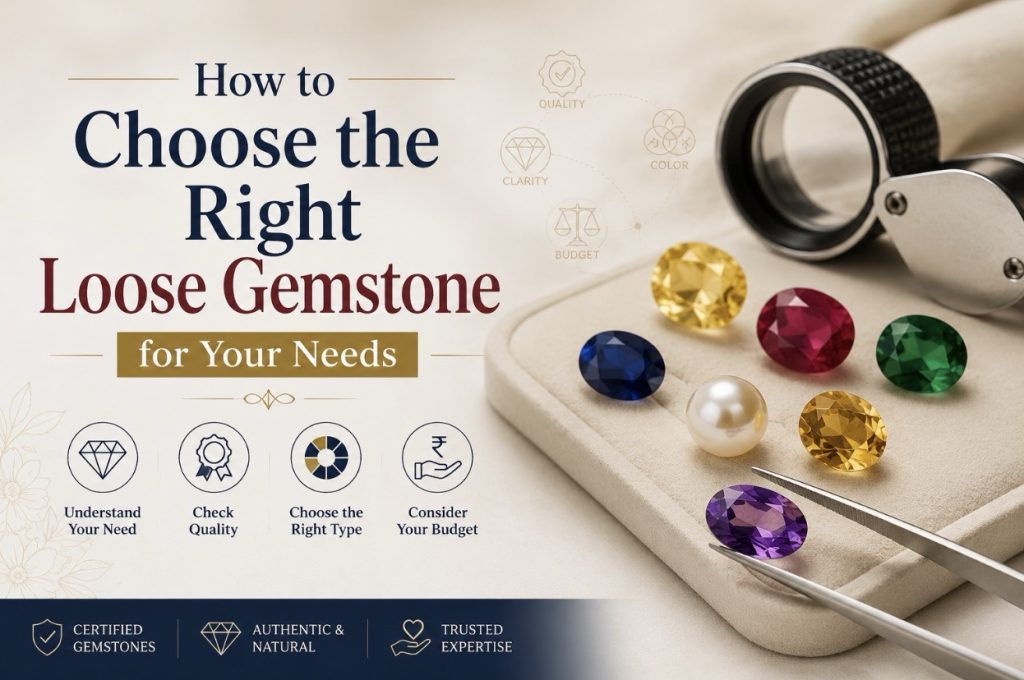
Buying a loose gemstone can feel overwhelming at first. Unlike a finished piece of jewelry, a loose stone asks you to evaluate quality, value, and suitability entirely on its own merits before it’s ever set into a ring, pendant, or pair of earrings. Whether you’re designing a custom engagement ring, adding to a collection, or simply love the beauty of natural stones, knowing what to look for will help you make a confident, informed choice. Here’s a practical guide to walk you through it.
1. Start With Purpose
Before you look at a loose gemstone, get clear on what the gemstone is for. This single decision shapes almost every choice that follows.
- Everyday jewelry (rings, bracelets): You’ll want a durable stone that can handle daily wear and occasional bumps.
- Special-occasion pieces (necklaces, earrings): Since these see less friction, you have more freedom to choose softer or more delicate stones purely for their beauty.
- Investment or collection pieces: Rarity, provenance, and long-term value matter more than day-to-day practicality.
- Custom design projects: You may need a stone in a specific shape, size, or color to match a designer’s vision.
Defining your purpose early narrows the field considerably and keeps you from falling in love with a stone that isn’t practical for your use case.
2. Understand Hardness and Durability
Gemstones vary widely in how well they resist scratching, chipping, and everyday wear. The Mohs hardness scale, which ranks minerals from 1 (softest) to 10 (hardest), is a useful starting reference.
- Highly durable (8–10): Original Blue Sapphire, ruby, and diamond are excellent choices for rings and bracelets because they resist scratches well.
- Moderately durable (6–7.5): Stones like garnet, aquamarine, topaz, and amethyst hold up reasonably well but benefit from protective settings.
- Softer stones (below 6): Opal, pearl, moonstone, and emerald (which also has natural inclusions that make it more brittle) are best reserved for earrings, pendants, or occasional-wear rings, and need gentler handling.
If you’re buying a stone for a ring you’ll wear constantly, durability should weigh heavily in your decision. For a pendant you’ll wear a few times a month, you have more flexibility.
3. Learn the Four C’s — and How They Apply Beyond Diamonds
Most people know the Four C’s from diamond shopping, but they apply to colored gemstones too, just with different emphasis.
Color For colored gemstones, color is often the single most important value driver. Look for rich, even, vivid color without noticeable zoning (patches of uneven tone). Personal preference matters here too — the “best” color is ultimately the one you love.
Clarity Clarity requirements vary by gemstone type. Emeralds, for instance, are expected to have some visible inclusions (often called “jardin,” French for garden) and this is considered normal. Sapphires and rubies are generally valued more highly when eye-clean. Ask what’s typical for the specific stone you’re considering.
Cut A well-cut stone reflects light beautifully and maximizes brilliance, while a poorly cut one can look dull even with excellent color and clarity. Cut also affects how large a stone appears relative to its carat weight.
Carat Weight Larger isn’t always better — a smaller stone with excellent color and clarity can be more valuable and more beautiful than a larger, lower-quality one. Weight should be balanced against the other three C’s.
4. Decide Between Natural, Treated, and Lab-Created Stones
Transparency about a stone’s origin and treatment history is essential.
- Natural, untreated stones are typically the most valuable and rare, since color and clarity occur without human intervention.
- Treated stones (heat-treated sapphires, oiled emeralds, irradiated topaz, for example) are extremely common in the market and can offer excellent value, but the treatment should always be disclosed by the seller.
- Lab-created stones are chemically and optically identical to their natural counterparts but are grown in controlled environments. They cost significantly less and are a great option for those who want beauty and durability without the higher price tag of a natural stone.
None of these options is inherently “wrong” — the right choice depends on your budget, values, and whether provenance matters to you.
5. Request Certification for Higher-Value Purchases
For any gemstone above a modest price point, ask for a certificate from a reputable independent gemological laboratory. A certification typically confirms:
- The stone’s identity (species and variety)
- Whether it’s natural or lab-created
- Any treatments it has undergone
- Measurements, weight, and sometimes origin
Certification protects you as a buyer and adds resale confidence down the line. Be wary of sellers who resist providing this documentation for a significant purchase.
6. Consider Shape and Cut Style for Your Setting
If you already know how the stone will be set, work backward from that design:
- Round and cushion cuts tend to maximize brilliance and suit most settings.
- Emerald and asscher cuts show off clarity and color but highlight inclusions more, since their broad facets act like windows into the stone.
- Oval and pear shapes can create the illusion of greater size and elongate the finger when set in a ring.
Bring measurements or a sketch of your setting when shopping so you can confirm the stone will fit properly.
7. Set a Realistic Budget — and Know Where Value Comes From
Gemstone pricing isn’t just about size. Origin, treatment, rarity, and market demand all play a role. A one-carat sapphire from a renowned source with excellent color can cost more than a three-carat stone of lesser quality. Decide on a budget range early, then let your priorities among color, clarity, cut, and carat weight guide you within that range, rather than fixating on carat weight alone.
8. Buy From a Reputable Source
Whether you’re shopping in person or online, work with sellers who:
- Provide clear, honest information about treatments and origin
- Offer certification or are willing to have a stone independently appraised
- Have transparent return policies
- Can answer detailed questions about the specific stone you’re considering
Take your time, ask questions, and don’t feel pressured to decide on the spot. A reputable dealer will welcome your due diligence.
Final Thoughts
Choosing the right loose gemstone comes down to matching the stone’s characteristics to your intended use, understanding what drives its value, and buying from a source you trust. Whether you’re drawn to the fiery brilliance of a sapphire, the deep green allure of an emerald, or the timeless sparkle of a diamond, taking a thoughtful, informed approach will help you find a stone you’ll treasure for years to come.