
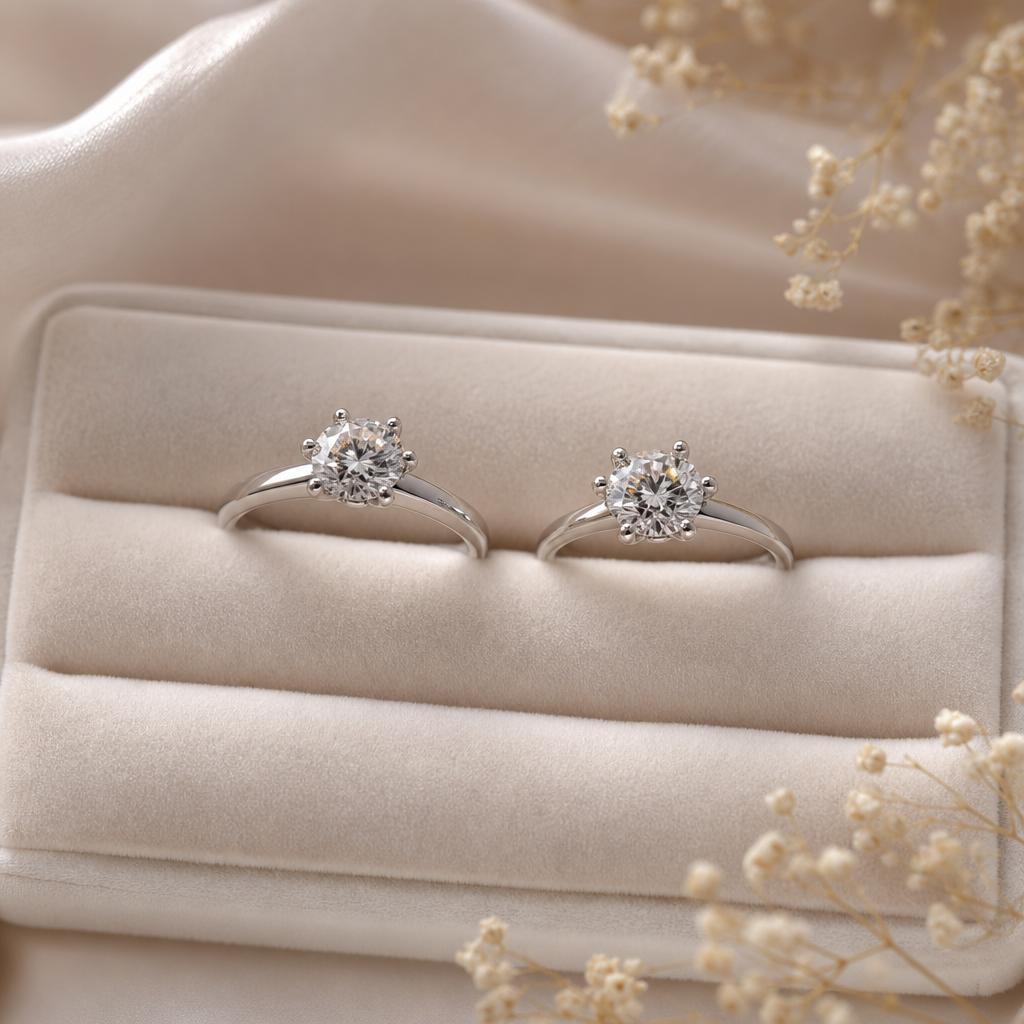
Choosing an engagement ring is one of the most meaningful decisions you will ever make. Beyond the cut and clarity of the center stone, the metal you select plays a defining role in the ring’s durability, appearance, and long-term value. White gold has become one of the most popular choices for modern engagement rings, offering a sleek, contemporary look that complements virtually every diamond shape. But within the world of white gold, a critical question arises: should you choose 14K or 18K? Understanding the difference between these two alloys can help you make a confident, informed decision that you will be proud of for decades.
What Does Karat Actually Mean?
The term “karat” refers to the purity of gold within a metal alloy. Pure gold, rated at 24K, is far too soft for everyday jewelry wear. To increase its strength and wearability, gold is mixed with other metals such as silver, copper, zinc, and palladium. The karat number tells you how many parts out of 24 are pure gold. So 18K white gold contains 18 parts gold and 6 parts other metals, making it 75% pure gold. Meanwhile, 14K white gold contains 14 parts gold and 10 parts other metals, equating to approximately 58.3% pure gold. This seemingly small numerical difference has significant real-world implications for the ring you wear every day.
The Role of Alloy Metals in White Gold
White gold does not occur naturally. Yellow gold is alloyed with white metals — typically palladium, silver, or nickel — to achieve its silvery appearance. Most white gold rings are then finished with a thin layer of rhodium plating, which gives them their bright, mirror-like shine. Over time, this rhodium layer can wear away, requiring re-plating to restore the ring’s original luster. The base alloy composition beneath the plating determines how the ring performs structurally and how it interacts with your skin over years of wear.
Durability and Everyday Wearability
One of the most practical considerations when choosing between 14K and 18K white gold is how the ring will hold up to daily life. Because 14K white gold contains a higher proportion of alloy metals, it is generally harder and more resistant to scratching and denting. This makes it an excellent choice for people with active lifestyles, those who work with their hands, or anyone who prefers a ring that requires less maintenance over time. The additional hardness means prongs holding your diamond in place are also more resistant to bending or wearing down, which is an important safety consideration for protecting your center stone.
Why Some Prefer 18K for Its Richness
Despite being slightly softer, 18K white gold has its own compelling advantages. Its higher gold content gives it a warmer, richer undertone beneath the rhodium plating, which some wearers find more luxurious. It is also less likely to cause skin reactions in people with metal sensitivities, since it contains fewer base metals like nickel. For those who prioritize the prestige of higher gold purity and are willing to take slightly more care of their ring, 18K is a deeply satisfying choice. Many fine jewelry designers prefer working with 18K for its superior malleability, allowing for more intricate and detailed settings.
Price Differences and Long-Term Value
From a budgetary standpoint, 14K white gold is typically more affordable than 18K, simply because it contains less pure gold. For buyers who want to allocate more of their budget toward the diamond itself — prioritizing cut quality, carat weight, or certification — choosing a 14K setting can be a strategically smart decision. The visual difference between the two karats is minimal to the naked eye, especially once both are rhodium-plated. However, if you are purchasing a ring as a long-term investment or heirloom piece, the higher gold content in 18K may hold slightly more intrinsic metal value over time.
The Importance of Diamond Certification
While the metal choice is crucial, the quality of the diamond you place in that setting matters just as much. Understanding why diamond certification is essential ensures that you are getting exactly what you pay for. A certified diamond from a reputable grading laboratory provides an objective, third-party assessment of the stone’s cut, color, clarity, and carat weight. Without certification, you are essentially taking a seller’s word for the quality of one of the most significant purchases of your life. Whether you choose a 14K or 18K setting, always pair it with a properly certified diamond to protect your investment and your peace of mind.
Diamonds in the Global Spotlight
The fascination with diamonds and precious metals extends far beyond personal jewelry purchases. The global market for exceptional stones continues to capture public imagination and set new benchmarks for value. A remarkable example of this enduring allure is the recent auction of a rare blue diamond in Switzerland, which drew international attention and record-breaking bids. Read about the extraordinary blue diamond sold at auction in Switzerland to understand just how extraordinary the world of fine diamonds can be. These headline events remind us that diamonds are not merely decorative — they are enduring symbols of rarity, beauty, and lasting worth.
Leon Diamond: Expert Guidance for Every Buyer
When navigating the nuanced world of engagement ring metals, having access to expert guidance makes all the difference. Leon Diamond is a trusted name in fine jewelry, known for its commitment to craftsmanship, transparency, and personalized service. Their team understands that every buyer has unique priorities — whether that means maximizing durability, achieving a specific aesthetic, or staying within a defined budget. Leon Diamond provides detailed, honest comparisons to help customers make decisions they feel genuinely confident about, without pressure or confusion. Their reputation is built on education as much as it is on the quality of their pieces.
Making the Right Choice for Your Lifestyle
When it comes to selecting between 14K vs 18K white gold for your engagement ring, there is no universally correct answer — only the answer that is right for you. Consider your daily activities, your sensitivity to metals, your budget, and how much maintenance you are willing to invest in keeping your ring looking its best. Both options offer genuine beauty and lasting quality when crafted by skilled jewelers. The key is understanding what each karat delivers and aligning that with your personal priorities.
Conclusion: An Informed Choice Is a Lasting Choice
The decision between 14K and 18K white gold is ultimately a reflection of your values, lifestyle, and vision for the future. Both karats offer the elegant, bright appearance that makes white gold so beloved for engagement rings. The differences lie beneath the surface — in durability, gold purity, price, and long-term care requirements. By taking the time to understand these distinctions, you are not just choosing a metal; you are choosing a foundation for a piece of jewelry that will carry deep personal meaning for the rest of your life. Invest in knowledge, invest in quality, and invest in a ring that truly represents your commitment.